
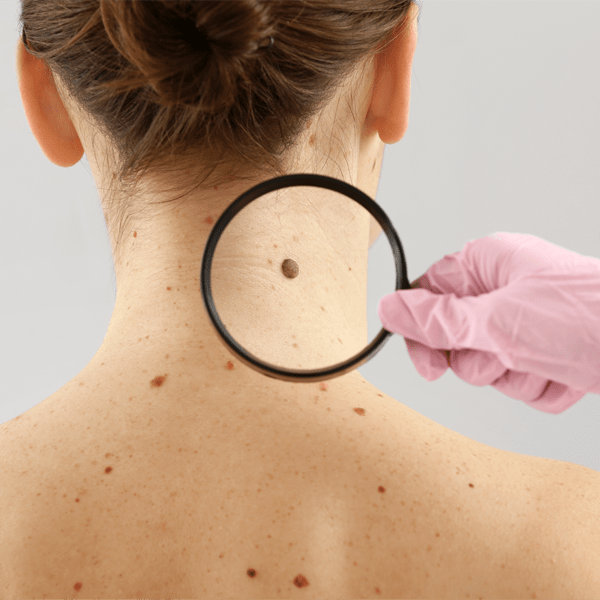
Skin cancer is one of the most common forms of cancer worldwide, and its incidence has been steadily increasing in recent years. Increased exposure to ultraviolet (UV) radiation from the sun, combined with longer life expectancy, has contributed significantly to the growing number of cases.
Although a cancer diagnosis understandably causes concern, it is important to know that most forms of skin cancer can be treated effectively when diagnosed at an early stage. For this reason, awareness, prevention and the timely evaluation of suspicious skin lesions are particularly important.
What Are the Most Common Types of Skin Cancer?
Basal Cell Carcinoma
Basal cell carcinoma is the most common form of skin cancer. It primarily develops in areas that are regularly exposed to the sun, such as the face, nose, ears and neck. It usually grows slowly and rarely spreads to other parts of the body; however, if left untreated, it can cause significant local tissue destruction.
Squamous Cell Carcinoma
Squamous cell carcinoma also most commonly develops in areas of chronic sun exposure. It is a more aggressive form of skin cancer compared with basal cell carcinoma and, in some cases, can spread to nearby lymph nodes or other parts of the body.
Melanoma
Melanoma is the most dangerous form of skin cancer. It can develop either in a pre-existing mole or on previously normal-looking skin. Early diagnosis is crucial, as when melanoma is detected at an early stage, the chances of successful treatment are particularly high.
What Factors Increase the Risk?
The risk of developing skin cancer is increased in individuals with:
- A history of intense or chronic sun exposure.
- Frequent sunburns, particularly during childhood and adolescence.
- Fair skin, light-colored eyes or hair.
- A large number of moles.
- A family history of skin cancer.
- A weakened or suppressed immune system.
- Advanced age.
What Symptoms Should Prompt Medical Evaluation?
Any new skin lesion or any change in an existing lesion should be evaluated by a specialist.
Signs that require further assessment include:
- A wound or sore that does not heal.
- A lump or growth that gradually increases in size.
- A lesion that bleeds easily or develops a scab or crust.
- Changes in the size, shape or color of a mole.
- The development of asymmetry or irregular borders in a mole.
- Itching, pain or irritation in a skin lesion.
Regular self-examination of the skin and preventive dermatological check-ups can contribute significantly to early diagnosis.
The Importance of Prevention
Prevention is one of the most important measures against skin cancer. Regular use of sunscreen with a high sun protection factor, avoiding sun exposure during periods of intense sunlight, and wearing a hat or protective clothing can significantly reduce the risk of developing skin malignancies.
Particular attention should be paid to protecting children from sunburn, as intense exposure to ultraviolet radiation at a young age is associated with an increased risk of developing skin cancer later in life.
How Is Skin Cancer Treated?
Surgical removal is the primary treatment option for most forms of skin cancer. The goal of surgery is to completely remove the lesion with appropriate safety margins in order to minimize the risk of recurrence.
Following removal, the excised specimen is sent for histopathological examination, which confirms the diagnosis and assesses whether the lesion has been completely excised.
The Role of the Plastic Surgeon
The Plastic Surgeon plays an important role both in the oncologically safe removal of the lesion and in reconstructing the defect created following excision.
This is particularly important when lesions are located in areas of high aesthetic and functional significance, such as the nose, eyelids, lips, ears or the face in general. In these cases, careful planning is required to achieve not only complete tumor removal but also preservation of the area’s natural appearance and function.
Depending on the size and location of the lesion, reconstruction may be performed using direct closure, local flaps or skin grafts. Modern plastic surgery techniques allow for individualized reconstructive solutions, with the goal of achieving the best possible functional and aesthetic outcome.
Conclusion
Skin cancer is a very common but, to a large extent, treatable disease when diagnosed early. Protection from ultraviolet radiation, regular monitoring of the skin and prompt evaluation of any suspicious lesion are the most important steps in prevention and effective treatment.
Early diagnosis can make a significant difference, while appropriate surgical management can provide both oncological safety and optimal restoration of the skin’s appearance and function.